We are currently experiencing temporary technical issues with our phone lines. Please contact us at (301) 310-6806.
We apologize for any inconvenience.
We apologize for any inconvenience.

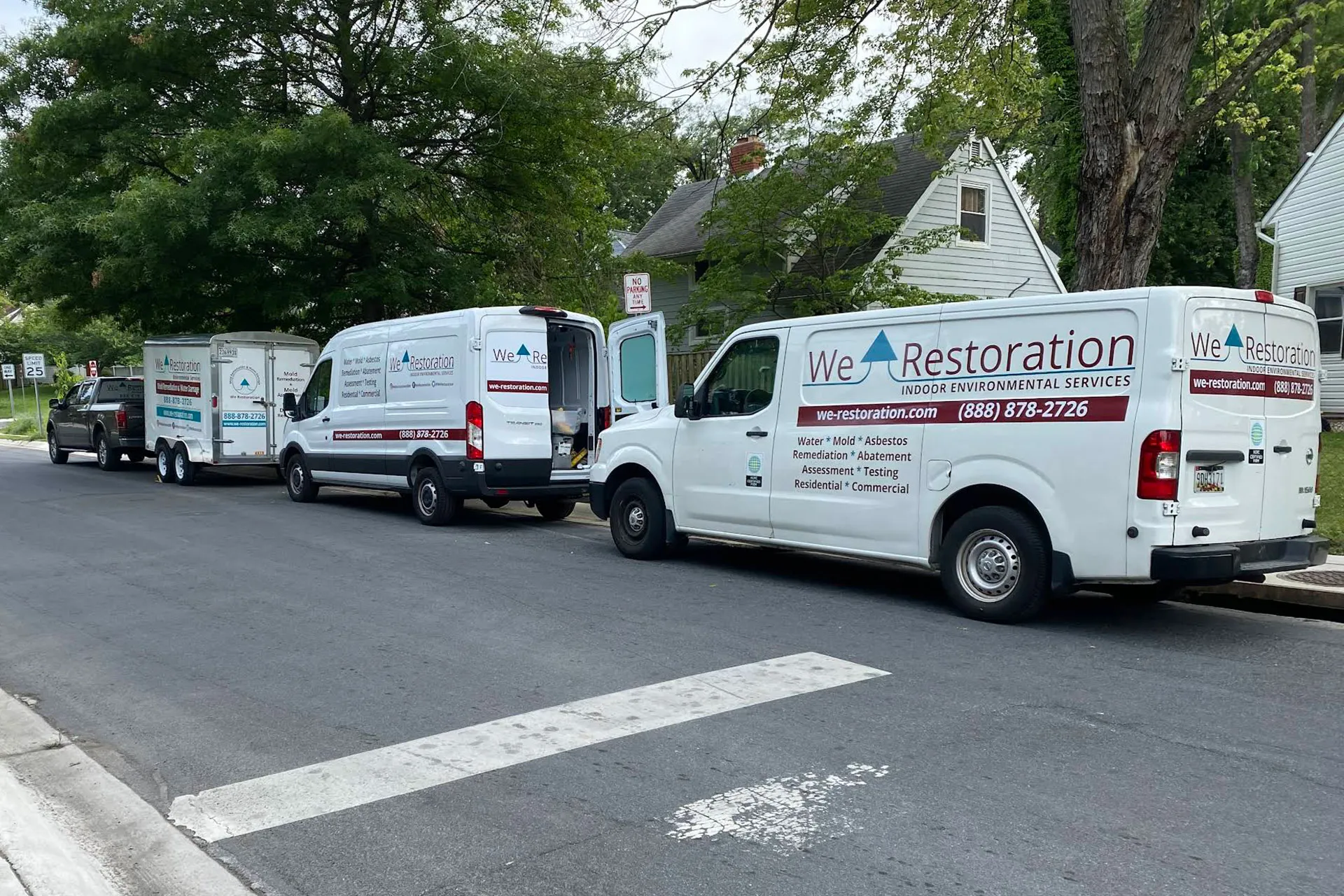

Seeing the first signs of mold in your home can be stressful. You may discover that the mold contamination has spread farther than expected and that safe removal requires the help of a professional mold remediation company in Silver Spring, Maryland. We Restoration can help you determine the impact of your mold infestation. We can help you safely remove toxic mold before it causes lasting impacts on your household. If you've found visible mold on any surface in your home or commercial property, the problem likely goes deeper. It's important to take the right precautions and seek mold removal and remediation immediately.
Mold develops when water intrusion or excess humidity leaves building materials damp for extended periods. Without mold remediation, proper drying, and adequate ventilation, the problem can spread rapidly, damaging your home’s structure and affecting indoor air quality.
Common causes of mold growth include:
Silver Spring’s humid climate, older infrastructure, and building density can make moisture problems even more difficult to manage. In addition, many properties throughout the area have basements, retaining walls, and aging drainage systems, which can cause moisture to collect around foundations and lower sections of structures.
A professional mold inspection helps determine where moisture and mold growth are present and how far contamination may have spread. Inspections are commonly scheduled after floods or sewage backups, but they can also be performed before purchasing a home or beginning a renovation project.
During a mold inspection, our experts will:
Inspection findings help determine whether mold remediation, structural drying, mold removal, or mold testing may be necessary before repairs begin.
Professional mold remediation can be complicated. When spores enter the open air, the mold can spread, increasing exposure risks and the potential for associated health issues. You must hire a professional mold remediation company, such as We Restoration, that can handle mold removal and perform a thorough cleanup to prevent recurrence.
If you've spotted mold in your home, it's important to call a trusted company to have it removed. Other steps that are helpful to take include:
These precautions can reduce exposure while you wait for a professional mold remediation team to inspect your home.
Mold testing measures mold spore activity and indoor air quality. Testing can also help identify hidden contamination after plumbing failures or water damage that may have spread behind walls or beneath flooring. This process may involve:
Test results help determine whether contamination has spread into adjacent areas of the property and whether additional mold removal or structural drying may still be necessary.
The mold remediation process begins as early as the customer's phone call. We Restoration will conduct a thorough investigation of the premises to determine the extent of the mold growth. Following that, our experts will work to isolate the area to prevent further spread of mold within the home.
We use HEPA filtration to clean contaminated air during mold removal and remediation. After this, we remove mold from your home, clean the surrounding area, and dispose of affected belongings. Our team also restores damaged sections of the property to their previous condition.
Depending on the extent of the contamination, remediation work may also involve:
In Silver Spring apartment buildings, mixed-use properties, and multi-unit residential communities, mold remediation may also require careful coordination to ensure residents, employees, customers, or tenants can still access unaffected areas. Post-remediation testing can also confirm that mold removal efforts successfully reduced mold contamination.
One of the best things you can do for your Silver Spring home or commercial property is to maintain an environment that is not conducive to mold growth. This takes a certain level of home maintenance, especially in the attic, basement, and bathrooms.
Mold grows in dark, moist environments. There are several mold-prevention steps you can take to avoid creating an environment conducive to mold growth:
Regular inspections of plumbing fixtures, roofing, ventilation systems, and lower-level areas can also identify moisture problems before they escalate.
Discovering mold in your home is an overwhelming and stressful experience. That is why at We Restoration, we treat our customers with the highest level of compassion and care during the mold removal process. We have decades of experience and can safely remove any contaminants from your home, restoring it to a safe, habitable condition. If you've discovered mold, your first call should be to a mold remediation specialist. Contact us today to learn how we can help!
Many older homes throughout Silver Spring have aging plumbing systems, enclosed wall cavities, older ventilation components, and partially finished lower levels that trap moisture.
Yes. In multi-unit residential buildings, water from burst pipes, roof leaks, or HVAC condensation can travel through shared wall cavities, ventilation pathways, and connected utility spaces.
Basements and garden-level apartments often have limited airflow, elevated humidity, and a risk of flooding after heavy rainfall. These conditions can allow mold growth to develop behind walls, beneath flooring materials, and inside storage areas.
To determine if mold remediation is necessary, commercial property owners should schedule a mold inspection after water intrusion, roof leaks, plumbing failures, musty odors, or indoor air quality concerns.